.svg)


Fire Alarm Benefits in 2025: The Power of Smart Alarms and IoT
Fire alarms cut death risk while IoT sensors and AI detection reshape safety in 2025. Discover proven benefits, ROI data, & emerging fire protection tech.

Every 23 seconds, a fire department responds to a fire somewhere in the United States. For businesses, this stark reality translates to an existential threat: property damage from fires totaled $23 billion in 2023 alone, with some companies forced to close permanently after a single incident. These are statistics impossible to ignore.
However, the solution is remarkably straightforward: working fire alarm systems reduce the risk of death by 60% and deliver a 5:1 return on investment through damage prevention and operational continuity. In 2025, these systems are becoming even more powerful with IoT sensors, AI analytics, and cloud monitoring transforming how businesses protect their assets and people.
The Life-Saving Impact: How Fire Alarms Reduce Deaths by 60%
According to the National Fire Protection Association (NFPA), the death rate per 1,000 fires is 60% lower in buildings with working smoke alarms compared to those without. This isn't just a statistic; it represents thousands of lives saved annually through early detection and warning systems. Nearly three out of five fire deaths (59%) occur in properties with either no alarms or non-functional systems. In other words, simply having detectors isn't enough; they must be operational and properly maintained.
The effectiveness varies significantly by system type. Hardwired smoke alarms with battery backup operate successfully in 94% of fires, while battery-only units function just 85% of the time. This 9% difference may not seem like much, but it translates directly into lives: hardwired systems reduce death rates by 67% compared to unprotected buildings, while battery-only systems achieve only a 30% reduction.

Financial Protection: The 5:1 Return on Fire Safety Investment
While protecting lives is always the main priority, the economic case for fire alarm systems proves equally compelling for business owners concerned about their bottom line. According to research, every dollar invested in fire prevention saves approximately 5 dollars in potential losses. This 5:1 return comes from multiple sources:
Direct property damage prevention: Advanced fire detection systems reduce property damage by up to 30% in commercial environments. Early detection allows for rapid response, limiting fire spread and minimizing structural damage. When you consider that the average commercial fire causes $35,000 in property damage, a 30% reduction is significant.
Business continuity protection: The hidden costs of fire damage often exceed the visible destruction. Business interruption, lost productivity, supply chain disruption, and customer attrition can devastate operations. Companies that experience major fires without adequate protection face a 70% chance of failing within three years. Fire alarms provide the early warning needed to prevent minor incidents from becoming catastrophic events.
Insurance premium reductions: Insurance carriers recognize the risk mitigation value of modern fire alarm systems. Businesses with professionally monitored systems, particularly those featuring advanced detection technology and 24/7 monitoring, often qualify for premium reductions annually. Over a system's typical 10-15 year lifespan, these savings alone can offset much of the initial investment.
Regulatory Compliance: Avoiding Fines and Legal Liability
Beyond the moral and financial imperatives, fire alarm systems are a legal requirement for most commercial properties under current building codes and regulations.
The International Building Code (IBC) Section 907 mandates approved fire alarm systems in new buildings, with specific requirements varying by occupancy type, building size, and use classification. These requirements carry significant penalties for non-compliance. Fines for fire code violations range from $500 to $5,000 per violation, with potential criminal liability in cases of gross negligence.
A factor even more concerning than fines is the liability exposure. Businesses without proper fire protection face substantial legal risk if a fire results in injury or death. This isn’t something to take lightly, as courts have consistently held property owners liable for damages when inadequate fire safety measures contribute to losses. Recent settlements have exceeded $10 million in cases where businesses failed to maintain required fire alarm systems.
The regulatory landscape continues to evolve, with new standards like the updated ANSI/UL 217 and ANSI/UL 268 requiring enhanced detection capabilities. These standards mandate that all new detectors effectively identify both smoldering and flaming fires while reducing false alarms from cooking, addressing the primary cause of system deactivation and subsequent failures.
2025 Fire Protection Trends: IoT, AI, and Smart Building Integration
Commercial fire safety is undergoing a technological revolution in 2025, with emerging innovations dramatically enhancing both detection capabilities and response effectiveness.
IoT-Enabled Smart Detection Systems

IoT-enabled smart detection systems are transforming traditional fire alarms into intelligent safety networks. These systems use interconnected sensors that continuously monitor multiple environmental factors: smoke density, temperature fluctuations, gas concentrations, and even air quality changes.
Real-time data analytics identify potential fire risks before they escalate, with predictive algorithms detecting patterns that human monitoring might miss. Modern IoT sensors can distinguish between actual threats and false alarm triggers, reducing nuisance activations by up to 90% while maintaining superior sensitivity to any genuine dangers.
AI and Machine Learning Risk Assessment
AI and machine learning risk assessment are another game-changing advancement. These systems analyze historical fire data, building usage patterns, and environmental conditions to predict high-risk scenarios.
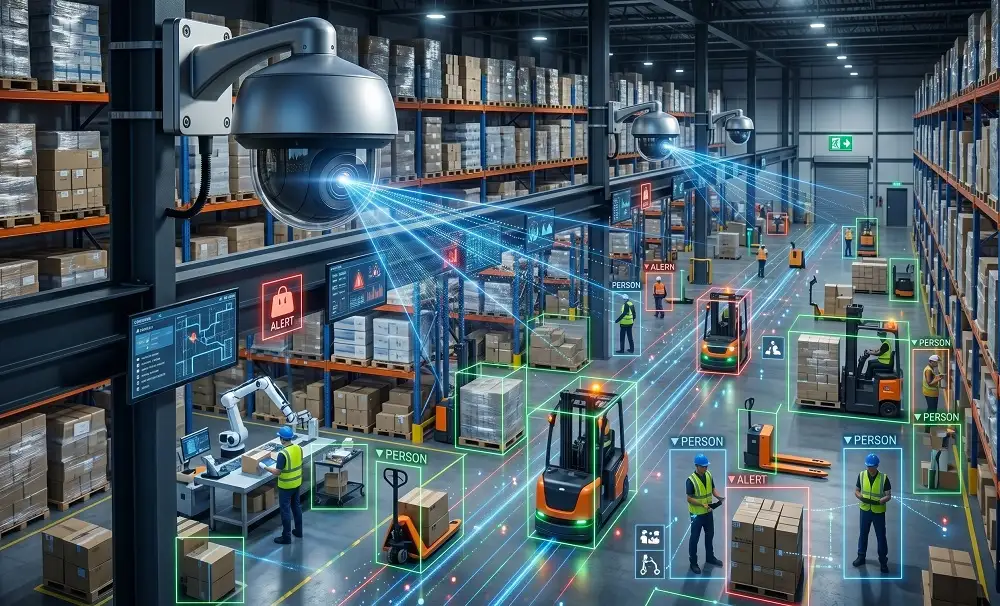
AI-powered cameras can now detect smoke and flames visually, offering redundant detection that works even when traditional sensors might fail. Machine learning algorithms continuously improve their accuracy, learning from each activation to better distinguish between normal operations and genuine emergencies.
Cloud-Based Monitoring and Management
Cloud-based monitoring and management enable unprecedented oversight and control. Facility managers can monitor multiple locations from one dashboard, receiving instant notifications on their mobile devices regardless of location.
Cloud systems automatically back up critical data and maintain operation logs, ensuring compliance documentation remains secure even if on-site systems are damaged. Remote diagnostics allow technicians to identify and often resolve issues without physical site visits, reducing maintenance costs by 25-40%.
Maintenance ROI: Why Preventive Care Saves 300-400%

Perhaps the most overlooked aspect of fire protection investment is the dramatic return generated by proper maintenance strategies.
Analysis of commercial fire system maintenance reveals a stark contrast between preventive and reactive approaches:
Reactive Maintenance Costs
- Annual expenses: $8,000-15,000
- Emergency repair probability: 60%
- Five-year total cost: $65,000-120,000
- System reliability: 70-80%
Preventive Maintenance Investment
- Annual expenses: $3,000-6,000
- Emergency repair probability: 15%
- Five-year total cost: $18,000-35,000
- System reliability: 94-98%
This represents a 300-400% return on investment for businesses choosing preventive maintenance. Beyond cost savings, regular maintenance in fire protection extends equipment lifespan by 5-8 years for control panels and 10-15 years for detection devices, deferring costly capital expenditures.
Missing or disconnected power sources are the source of the majority of fire alarm failures. The NFPA 72 standard requires monthly visual inspections, quarterly testing, and annual professional certification. While these requirements might seem burdensome, they ensure the 94% operational rate that saves lives and property.
Secure Your Business with Professional Fire Protection
Fire alarm systems in 2025 offer unprecedented protection through IoT sensors, AI analytics, and cloud-based monitoring, while maintaining the proven benefits of 60% fatality reduction. Smart technology combined with traditional fire safety features helps businesses enhance protection while reducing their operational costs.
Don't wait for regulations to force upgrades or incidents to reveal vulnerabilities in your current system. At Forbel, we specialize in designing and implementing cutting-edge commercial fire alarm systems that leverage the latest 2025 technologies. Contact us today to schedule your comprehensive fire safety assessment and discover how our modern protection systems can safeguard your operations while reducing long-term costs.
.jpeg)
Upgrade to Smarter Fire Safety with Forbel
Modern fire alarm systems with IoT and AI reduce fatalities by 60% and prevent costly damage. Protect your business today.

Heading

Heading






Heading 1
Heading 2
Heading 3
Heading 4
Heading 5
Heading 6
Lorem ipsum dolor sit amet, consectetur adipiscing elit, sed do eiusmod tempor incididunt ut labore et dolore magna aliqua. Ut enim ad minim veniam, quis nostrud exercitation ullamco laboris nisi ut aliquip ex ea commodo consequat. Duis aute irure dolor in reprehenderit in voluptate velit esse cillum dolore eu fugiat nulla pariatur.
Block quote
Ordered list
- Item 1
- Item 2
- Item 3
Unordered list
- Item A
- Item B
- Item C
Bold text
Emphasis
Superscript
Subscript