.svg)


AI-Based Security System: Benefits and Deployment Steps
Understand how AI-based threat detection security systems work, what they cost, and whether your building's infrastructure supports an upgrade.

AI security systems help businesses detect threats faster, reduce blind spots, and respond before incidents escalate. For commercial properties managing hybrid schedules, multiple access points, and limited on-site staff, these systems represent practical infrastructure. Forbel Alarms partners with facility managers and property owners across Chicagoland as Chicago commercial security system integrators who build solutions for real commercial environments.
Why AI Security Systems Close the Gap Traditional Alarms Can't
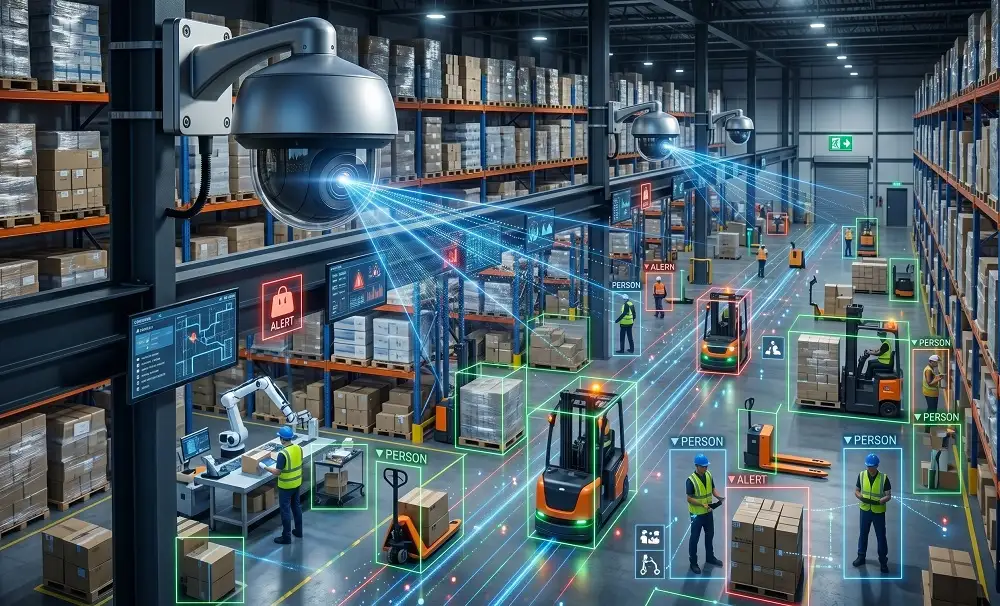
AI security systems address a measurable operational gap: commercial buildings are larger, staff coverage is thinner, and the variety of threats has grown beyond what trigger-based alarms were designed to handle. Machine learning models learn what normal activity looks like in a specific environment and flag deviations automatically, unlike a conventional alarm that responds only to predefined triggers.
The Elk Grove Technology Park corridor reflects how the Chicago-area business community has moved from treating artificial intelligence as abstract to treating it as physical infrastructure, with businesses across the Chicagoland industrial belt now evaluating AI-assisted monitoring as a standard part of facility planning.
Specific operational advantages for commercial properties include:
- Reduced false alarms through behavioral context that distinguishes routine events from genuine threats;
- After-hours coverage without additional guard staffing, using active behavioral monitoring instead of passive recording;
- Scalability across multiple access points, floors, and parking structures from a unified analytics dashboard;
- Faster response driven by automated alert prioritization, not manual camera review;
- Integration with existing access control, intrusion detection, and cloud-based security cameras.
AI-assisted monitoring gives facilities an earlier warning layer before physical or digital incidents escalate to that cost level.
How Forbel Alarms Designs and Integrates AI Security Systems
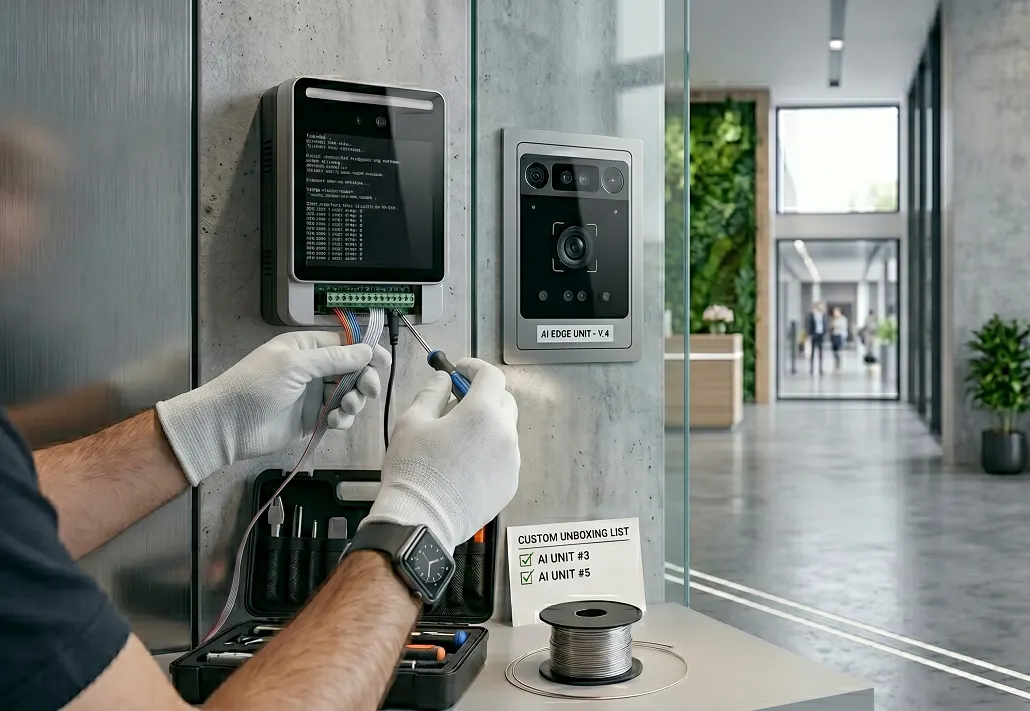
Forbel Alarms designs AI security systems by integrating cameras, sensors, access control hardware, and analytics platforms into a single coordinated solution. The company starts with a full site assessment, mapping entry points, loading docks, shared lobbies, parking areas, and after-hours access patterns before specifying any equipment.
Three core technologies drive detection accuracy:
- Anomaly detection: Machine learning identifies deviations from normal patterns, such as a delivery vehicle in a restricted zone outside scheduled hours. IBM's anomaly detection documentation confirms that AI and ML automatically identify unexpected changes that manual review would miss at scale.
- Behavioral analytics: Dynamic profiles build over time. As Microsoft's UEBA documentation explains, machine learning builds behavioral profiles for users and entities, improving detection accuracy as the system learns a property's specific rhythms.
- Computer vision: Deep learning algorithms process video feeds in real time to recognize objects, people, and behavioral patterns without requiring manual frame review.
For a multi-tenant industrial facility near Elk Grove Village, that might mean integrating biometric authentication at dock doors with camera-based loitering detection in the parking lot, all feeding into a single analytics dashboard. Forbel's approach to CCTV and intrusion detection systems reflects this philosophy: each component is designed to work with the others, not operate in isolation.
Physical and Cyber Threats AI Systems Detect Earlier
AI-assisted monitoring extends intrusion detection to behavioral recognition, catching threats that trigger-based alarms miss entirely. The categories below represent the most common scenarios Forbel encounters across Chicagoland commercial properties.
Common physical threats AI systems address:
- Unauthorized access at restricted entry points, including tailgating behind credentialed employees;
- Loitering detection near loading docks, parking structures, or building perimeters;
- After-hours movement in zones that should be unoccupied, flagged automatically without a guard on patrol;
- Credential misuse, where a valid badge is used at an unusual time or location, triggering an anomaly alert.
On the cybersecurity side, AI assists with phishing-related credential misuse, malware-triggered network anomalies, and data breach detection. The NIST adversarial machine learning taxonomy outlines attack lifecycle stages and mitigation methods that help organizations understand where AI models themselves are vulnerable.
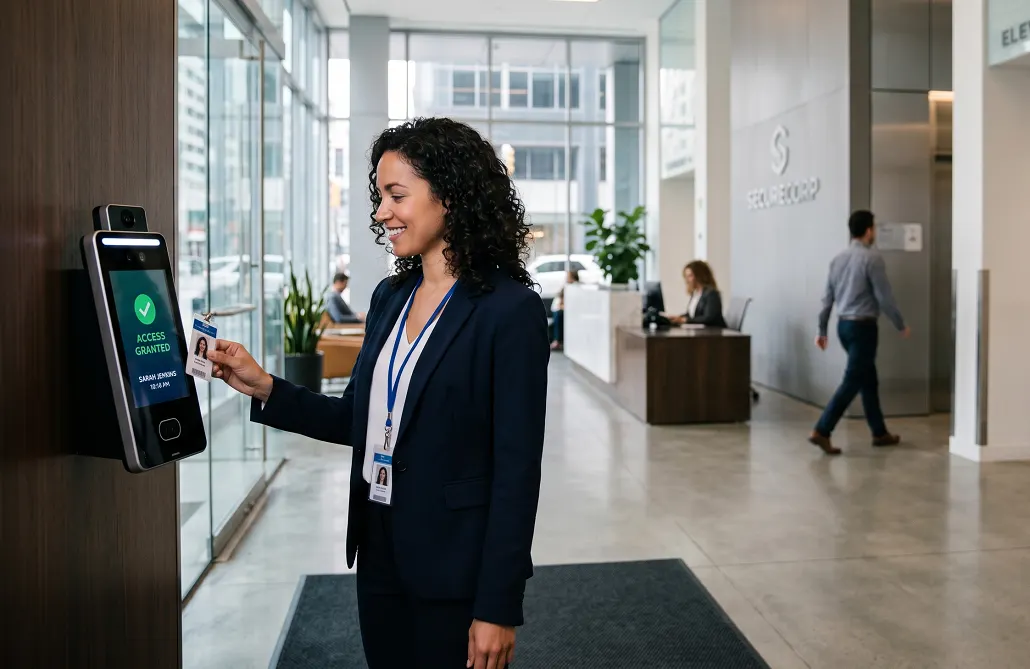
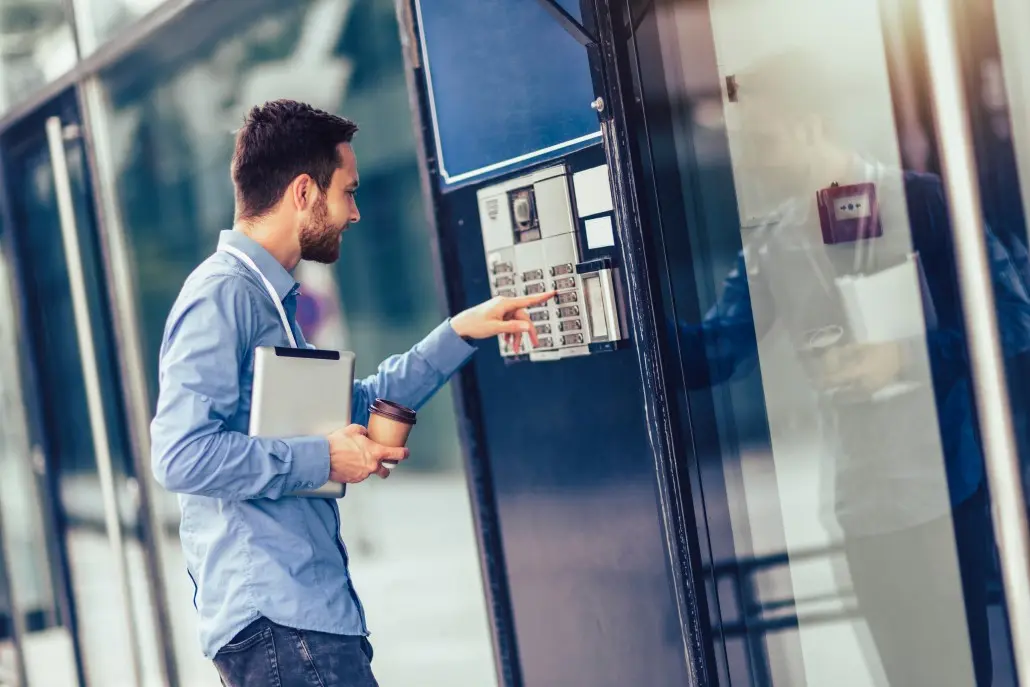
Adversarial attacks, model inversion, and data poisoning deserve attention during deployment, since an adversarial attack can manipulate input data to fool an AI model into misclassifying an event. For properties using AI in access control systems, identity verification at entry points adds a layer of protection that traditional keypads cannot provide.
#cta_start
AI Security Systems Built for Your Property
Every commercial facility has different entry points, occupancy patterns, and risk levels. Forbel Alarms designs integrated AI security systems that match your building's specific needs.
#cta_end
AI vs. Traditional Security Systems: What Changes in Practice
Choosing between AI-assisted and traditional security comes down to a facility's size, staffing model, and risk tolerance. The table below compares how each approach performs across the capabilities that matter most for commercial properties.
AI does not replace security guards, cameras, or access policies. It improves how those resources are used by filtering noise and surfacing the events that actually require human attention. For smaller or lower-risk areas, traditional systems remain cost-effective.
Five Steps to Evaluate and Deploy AI Security at a Commercial Property
A practical deployment framework for mid-market commercial properties:
Step 1: Site Assessment
Map all entry points, camera blind spots, and access patterns. Identify zones by risk level and document current coverage gaps before evaluating any specific platform or hardware.
Step 2: Risk Assessment
Define the threat types most relevant to the facility: theft, vandalism, unauthorized access, or data breach. Prioritizing specific threat categories shapes which analytics capabilities matter most for that property.
Step 3: Infrastructure Review
Audit existing cameras, servers, firewalls, and access control hardware for compatibility with AI analytics platforms. Many cameras installed within the past five to seven years are compatible without full replacement, which significantly reduces upfront cost.
Step 4: Pilot Zone Deployment
Deploy AI monitoring in one high-priority area first, such as a loading dock or main lobby. Measure false positive rates and response time before committing to a full rollout, generating real performance data to support broader investment decisions.
Step 5: Integration and Staff Training
Connect all systems to a unified dashboard and train staff on alert workflows and escalation procedures. A system is only as effective as the team responding to its alerts, so training is as important as the technology itself.
Relevant compliance frameworks include GDPR Article 32 for data encryption, HIPAA for healthcare properties, ISO 27001 for information security management, and the NIST Cybersecurity Framework for broader risk governance. Spring maintenance cycles in March and April align naturally with technology assessments, making them a practical window for these upgrades.
Your Next Step Toward Smarter Commercial Security
AI security systems have become standard infrastructure for commercial properties because they improve visibility, response speed, and coordination across large, complex facilities. For facility managers across Chicagoland, the practical question is no longer whether to adopt AI, but how to implement it in a way that fits the property's actual risk profile and budget.
Forbel Alarms designs, installs, and integrates AI security systems for commercial buildings, multi-unit properties, and industrial facilities. Start with a no-obligation site assessment to find out what your building specifically needs.

Heading

Heading




Heading 1
Heading 2
Heading 3
Heading 4
Heading 5
Heading 6
Lorem ipsum dolor sit amet, consectetur adipiscing elit, sed do eiusmod tempor incididunt ut labore et dolore magna aliqua. Ut enim ad minim veniam, quis nostrud exercitation ullamco laboris nisi ut aliquip ex ea commodo consequat. Duis aute irure dolor in reprehenderit in voluptate velit esse cillum dolore eu fugiat nulla pariatur.
Block quote
Ordered list
- Item 1
- Item 2
- Item 3
Unordered list
- Item A
- Item B
- Item C
Bold text
Emphasis
Superscript
Subscript