.svg)


AI Access Control: Smarter Entry Decisions for Commercial Buildings
AI access control goes beyond badge checks. See real costs, compliance requirements, and deployment priorities for Chicago commercial facilities.
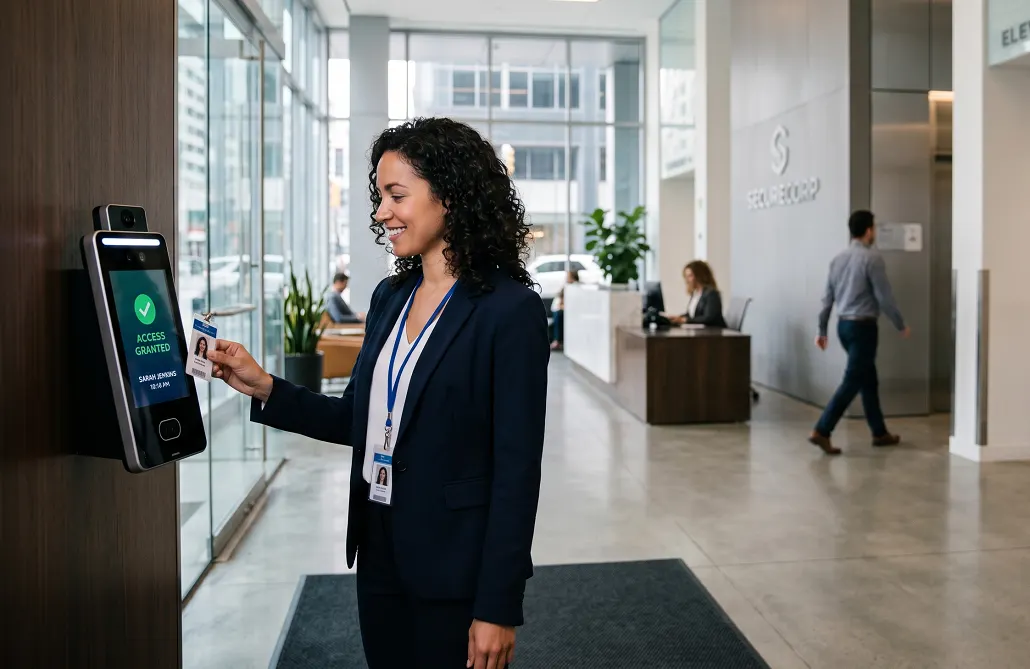
AI access control uses artificial intelligence to verify identity, detect unusual entry behavior, and improve security decisions in real time. For facility managers evaluating a system upgrade, the practical result is faster, more accurate entry decisions that reduce unauthorized access without disrupting daily operations.
Forbel Alarms, a licensed Chicago-area access control contractor, applies AI as a practical layer added to proven systems — not a full hardware replacement.
What Changes When AI Is Added to Access Control
Legacy badge-only systems make a single binary decision: does this credential exist in the database? That worked for smaller facilities. It falls short at busier sites where credential sharing, tailgating, and lost cards create real gaps.
AI improves access control by adding a second layer of judgment. Instead of checking only a card number, the system also evaluates:
- Schedule match: Does this entry fit the user's normal access pattern?
- Simultaneous use: Does the same credential appear at two locations at once?
- Credential status: Is the badge being used after a reported theft or termination?
Machine learning builds a baseline of normal activity over time. When a pattern breaks from that baseline, the system flags it for review rather than granting access automatically. This is behavioral access control applied at the door level.
NIST SP 1800-35 frames digital identity as a challenge of proofing and authenticating individuals over open networks, where impersonation and fraudulent credential claims are real risks. AI access control addresses this by moving beyond static credentials toward continuous, context-aware verification.
Hardware and Software Components That Drive AI Access Control
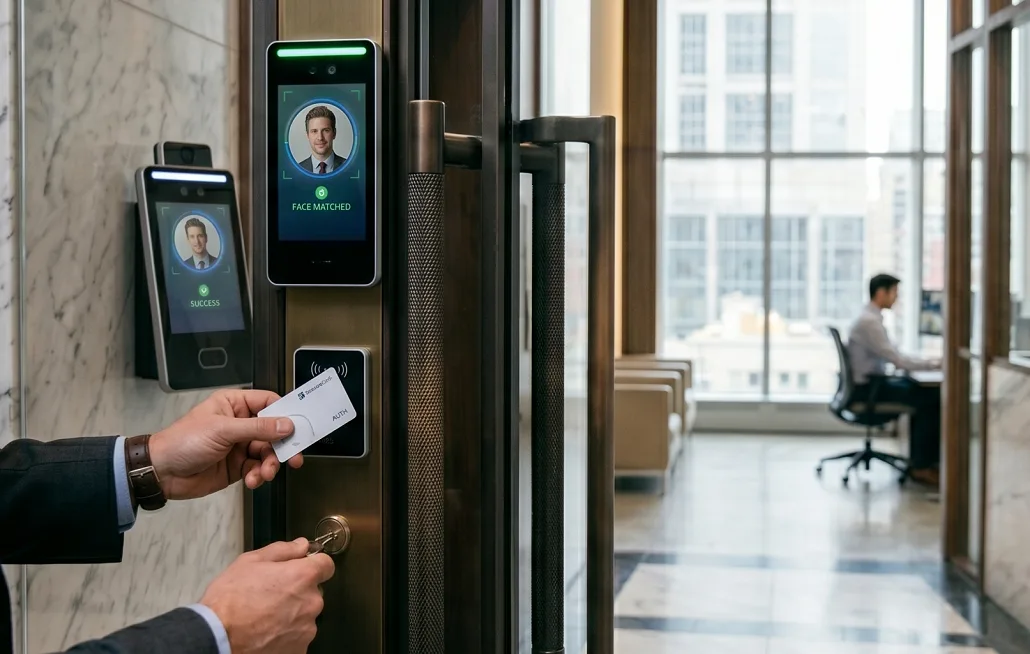
A well-designed AI access control system combines several components that work together rather than operate independently.
Physical Authentication at the Door
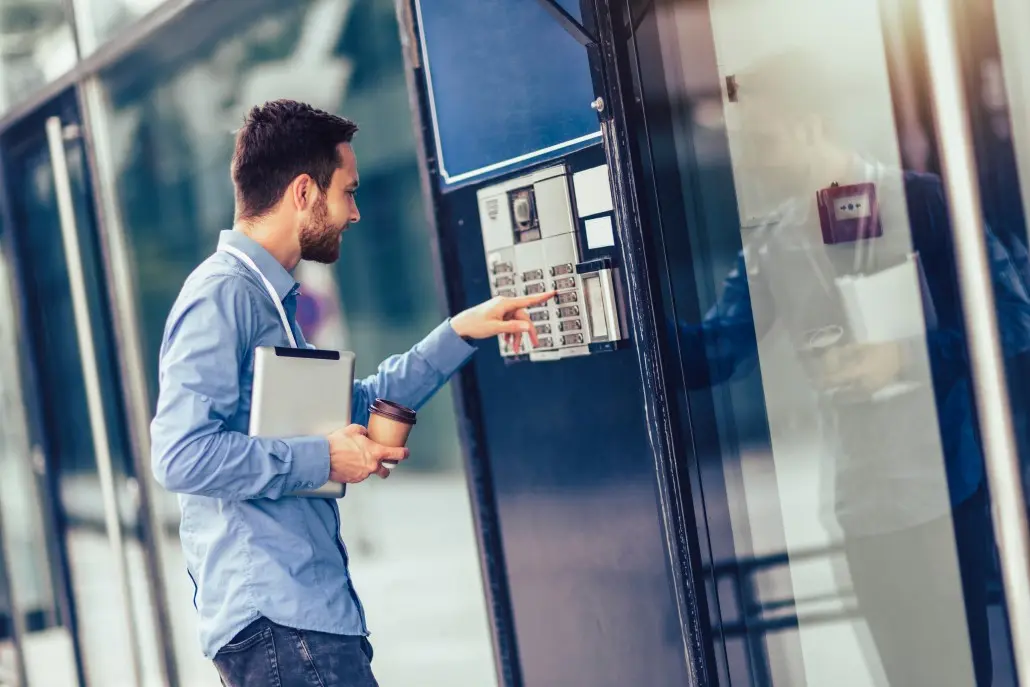
Biometric authentication uses fingerprints, iris patterns, or facial geometry to confirm identity at the door. Facial recognition matches a live image against enrolled profiles and flags mismatches in under a second. The types of access control readers available today range from basic card readers to multimodal biometric units with edge processing built in.
NIST SP 800-63B requires multi-factor authentication at higher assurance levels to include proof of possession of two distinct authentication factors, meaning a stolen badge alone cannot grant entry.
Intelligence, Analytics, and Monitoring
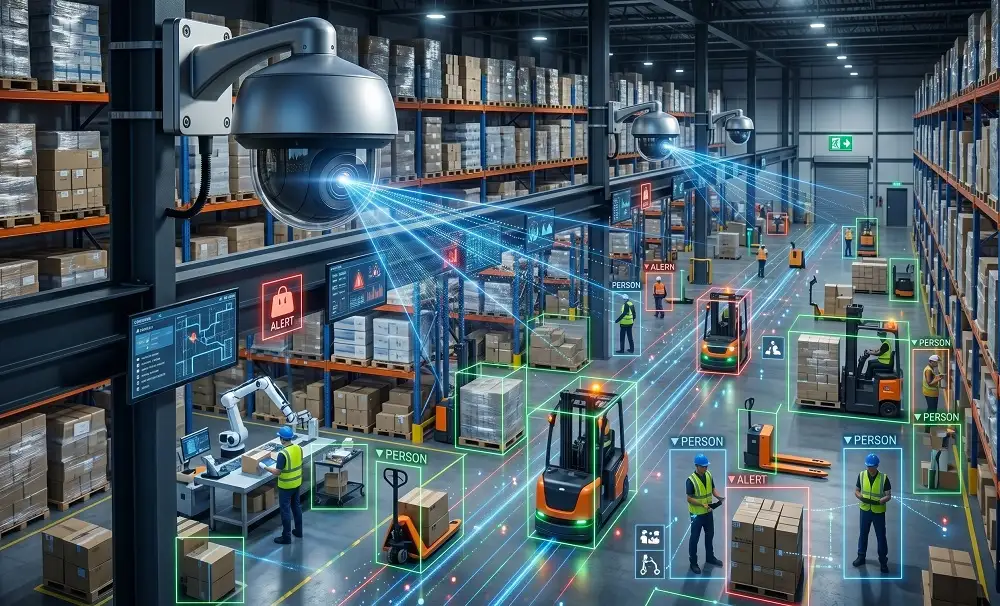
Machine learning processes signals from access readers, cameras, and building sensors to build a behavioral profile for each user. Microsoft Entra ID Protection analyzes hundreds of signals in real time to calculate sign-in risk — a model physical access platforms now replicate at building entry points. Edge computing processes biometric checks locally to reduce door latency.
Cloud-based access control connects all inputs to a central dashboard where facility managers review alerts and pull audit logs remotely. Pairing it with AI-powered video intercom systems at lobby entrances produces a unified identity layer across the full building perimeter.
How AI Access Control Supports Zero Trust Architecture
NIST SP 800-207 defines zero trust as a model where no implicit trust is granted based on physical or network location — every access request is evaluated on its own merits, every time. Traditional access control fails this standard: a valid badge grants entry regardless of context, time, or behavior. AI-assisted systems fix this by adding continuous verification at every door event.
The table below maps each zero trust principle to how traditional and AI-assisted systems handle it in practice.
The three principles of zero trust — verify explicitly, use least privilege, and assume breach — map directly to the AI column in each row. Explicit verification appears in behavioral credential checks. Least privilege is enforced through automated, tier-specific policy rules. Assume breach drives real-time anomaly flagging rather than post-incident review. Security system integrators can configure these policies across all access tiers in a single deployment.
Compliance Requirements and Cost Benchmarks for AI Access Control
Regulatory requirements and budget constraints are the two factors that most often slow AI access control projects. Both are manageable when addressed early.
Regulatory Frameworks That Apply to AI Access Control
Illinois facilities collecting biometric data must comply with BIPA. Healthcare sites face HIPAA technical safeguard requirements for electronic protected health information. Organizations handling EU resident data must meet GDPR Article 5 standards for lawful, transparent data processing.
AI access control supports compliance by generating detailed audit logs, enforcing authorization management automatically, and reducing manual review burden. SOC 2 and FIPS 201 requirements for access audit trails become easier to satisfy when every entry event carries a timestamped risk score.
What AI Access Control Costs per Door
The access control system cost per door varies based on building type, credential method, and integration complexity. These figures reflect typical commercial installations in the Chicago market:
- Basic AI-enhanced reader with cloud software: $800–$2,500 installed.
- Biometric multimodal reader with edge processing: $2,500–$6,000 installed.
- Integration, wiring, and commissioning: $500–$1,500 per door.
- Annual software and maintenance: 15–20% of hardware cost.
A phased rollout starting with high-risk entry points delivers measurable risk reduction before the full budget is committed. The benefits of access control systems extend beyond security to reduced insurance exposure and simplified compliance reporting.
Where AI Access Control Delivers the Most Value First
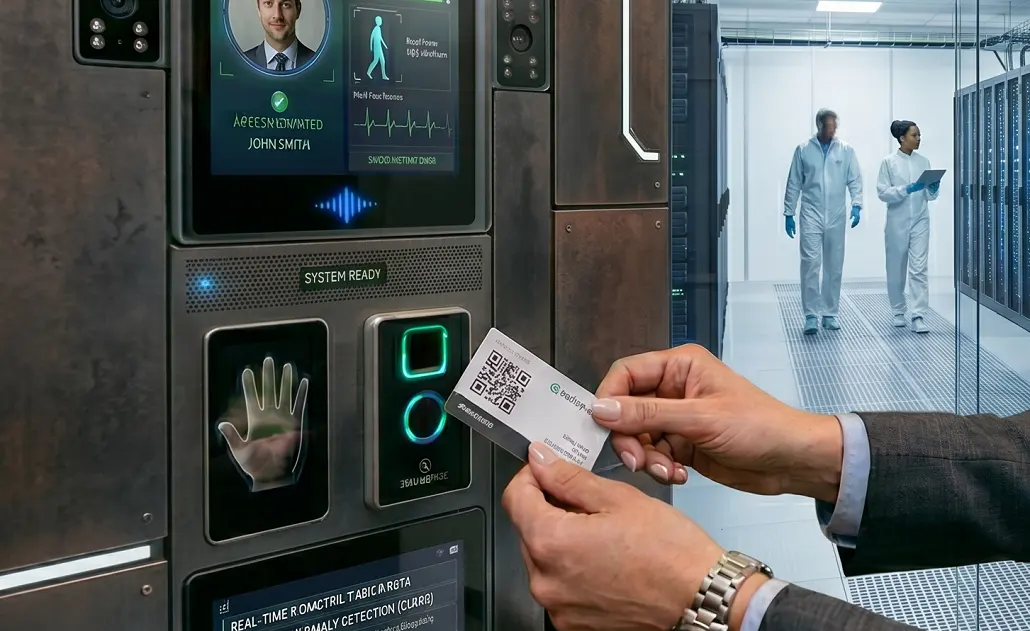
Not every door in a commercial building carries the same risk. AI access control returns the most measurable value when deployed at entry points where an unauthorized breach has the highest operational, financial, or regulatory consequence.
The highest-priority locations by building type:
- Server rooms and IT closets: Unauthorized entry exposes protected data and triggers HIPAA or SOC 2 audit failures with direct liability.
- Executive floors and restricted office zones: AI flags simultaneous badge use and after-hours access before credential sharing becomes an incident.
- Healthcare pharmacy and controlled substance storage: Physical access to dispensing areas carries the same compliance weight as electronic PHI safeguards.
- Main lobby entrances in multifamily buildings (50+ units): High resident turnover and frequent visitors create tailgating risk that AI-assisted door control addresses without on-site staff.
- Data center and industrial facility access points: A breach at one high-consequence door — cage access, power rooms, colocation suites — can affect multiple tenants simultaneously.
Starting with these locations concentrates budget at the points of greatest exposure. It also produces audit log data and anomaly baselines quickly, which informs the design of subsequent deployment phases across the rest of the facility. Forbel's commercial security solutions in Chicago cover all of these deployment scenarios across office, healthcare, multifamily, and industrial building types.
#cta_start
Ready to Plan Your AI Access Control Budget?
Forbel Alarms provides itemized cost estimates based on your building's entry points, existing wiring, and compliance requirements — before any commitment.
#cta_end
How Forbel Alarms Designs and Installs AI Access Control Systems
Forbel Alarms designs AI access control systems starting with a full site survey, not a product catalog. The process follows a consistent sequence:
- Site assessment: Evaluate entry points, traffic patterns, existing wiring, and tenant needs before recommending any hardware or software.
- System design: Integrate access control with surveillance, intercom, and building security so every component shares data across one platform.
- Installation and commissioning: Chicago retrofits of existing card-reader systems typically run eight to fourteen weeks; new construction moves faster.
- Accessibility and training: Biometric readers include fallback credential options per FIDO Alliance accessibility guidance, with provisioning and change management included in scope.
Forbel's CCTV and access control projects demonstrate how integrated deployments perform across building types. The best commercial access control solutions are the ones matched to a specific building's flow, not the ones with the longest feature list.
Upgrade Your Building's Access Control with Forbel Alarms
Credential-only entry leaves gaps that badge checks alone cannot close. Behavioral verification, real-time anomaly detection, and automated audit logging are now standard in high-occupancy commercial facilities — and the hardware investment is smaller than most budgets assume.
Forbel Alarms provides commercial security solutions across Chicago and the Midwest, covering access control, surveillance, and intercom from site survey through commissioning. Contact Forbel to schedule an assessment and get a phased upgrade plan with transparent pricing.

Heading

Heading
Faq
Is AI access control secure enough for high-risk facilities?
Yes, when properly integrated. AI access control systems use layered verification and continuous behavioral analysis to reduce false approvals. No system eliminates all risk, but a well-designed AI layer significantly reduces unauthorized access compared to credential-only systems. NIST SP 800-207 provides the architectural framework that guides these deployments.
Can AI access control work with legacy hardware?
In most cases, yes. AI software can connect to existing access control panels and readers through middleware or API integration. A site assessment determines which components can be retained and which need replacement.
Where does AI access control make the most sense first?
Start at the highest-risk entry points: server rooms, executive floors, pharmacy storage in healthcare settings, or main lobby entrances in multifamily buildings with 50 or more units. These are the doors where a breach carries the highest operational, financial, and regulatory consequence.
What biometric options are available beyond fingerprint?
Current systems support fingerprint, iris recognition, and facial geometry, as well as multimodal combinations for higher-assurance environments. All compliant deployments include fallback credential options to meet accessibility requirements.
How long does an AI access control installation take?
For a Chicago commercial building retrofitting an existing card-reader system, installation and commissioning typically runs eight to fourteen weeks. New construction timelines are shorter because conduit and wiring are planned from the start.




Heading 1
Heading 2
Heading 3
Heading 4
Heading 5
Heading 6
Lorem ipsum dolor sit amet, consectetur adipiscing elit, sed do eiusmod tempor incididunt ut labore et dolore magna aliqua. Ut enim ad minim veniam, quis nostrud exercitation ullamco laboris nisi ut aliquip ex ea commodo consequat. Duis aute irure dolor in reprehenderit in voluptate velit esse cillum dolore eu fugiat nulla pariatur.
Block quote
Ordered list
- Item 1
- Item 2
- Item 3
Unordered list
- Item A
- Item B
- Item C
Bold text
Emphasis
Superscript
Subscript