.svg)


NFPA 72 Smoke Detector Requirements (2026): What Commercial Building Owners Must Know
Forbel Alarms explains commercial smoke alarm requirements: what works for commercial properties, what to evaluate, and how to deploy it right.
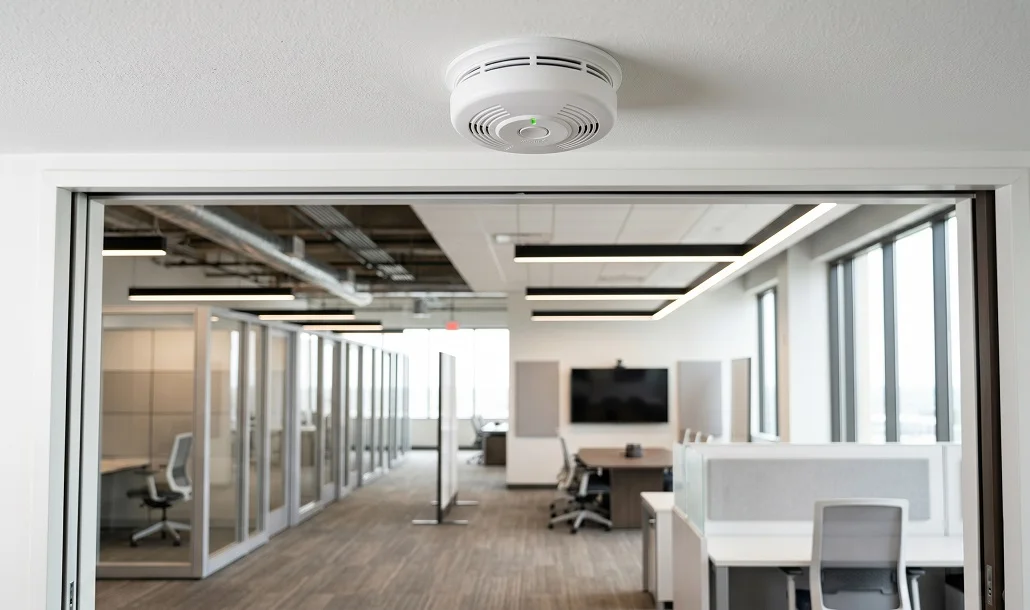
Commercial smoke alarm requirements are governed by NFPA 72, local fire codes, ADA visibility rules, and occupancy-specific design factors. Owners and facility managers should verify detector type, placement, testing schedules, and documentation before any inspection. Forbel Alarms designs and installs commercial fire alarm systems for properties across Chicago and the Midwest.
Forbel Alarms on Commercial Smoke Alarm Requirements
NFPA 72 sets requirements for fire detection, signaling, and emergency communications across nearly every commercial occupancy type. It establishes installation standards, interconnectivity requirements, testing intervals, and record-keeping expectations. Local amendments and the Authority Having Jurisdiction (AHJ) can modify how those provisions apply to a specific building, so the national standard is the floor, not the ceiling.
Smoke Alarms vs. Smoke Detectors
A smoke alarm is a self-contained unit with its own sounder. A smoke detector is a sensing device wired into a full fire alarm control panel. Most commercial buildings require the detector-and-panel configuration, not standalone alarms.
ADA and UL 268 Requirements
ADA requirements add another layer. Per the U.S. Access Board guidelines, fire alarm systems must have both audible and visible notification devices when installed, upgraded, or replaced. The ADA also requires that alarm systems in covered facilities comply with current accessibility standards, including strobe candela output and placement standards for occupants with hearing impairments.
UL 268 includes more than 250 technical revisions consolidated into approximately 50 lab tests, addressing nuisance alarm reduction while maintaining sensitivity to real fire conditions. OSHA regulations require that fire detection systems be tested and adjusted as often as needed to maintain reliable operating condition.
Commercial Smoke Alarm Requirements by Detector Type

UL 268 governs performance standards for smoke detector systems, and the detector type selected must match both the code requirements and the environment where it will operate.
Photoelectric and Lonization Detection
Photoelectric smoke detection responds well to slow, smoldering fires that produce large combustion particles. It tends to generate fewer nuisance alarms in commercial kitchens, break rooms, and spaces near HVAC registers. Ionization smoke detection responds faster to fast-flaming fires but has historically produced more cooking-related false activations.
Next-generation multi-sensor detectors use algorithms that distinguish smoldering or flaming fire signatures from cooking smoke, making them a practical choice for mixed-use commercial environments.
Aspirating and Addressable Systems
Aspirating smoke detection draws air samples through a network of pipes to a central sensing unit. It is the preferred solution for data centers, clean rooms, and high-airflow warehouse environments where ceiling-mounted detectors may miss early-stage smoke. The UL Smoke Characterization Project informed detector performance criteria across these non-standard environments.
Addressable fire alarm systems assign a unique identifier to each device, pinpointing the exact location when a detector activates or faults. Conventional systems group devices into zones, narrowing a problem to a circuit rather than a single device. For properties in the Elk Grove Village Business Park or larger multi-tenant buildings in Chicago, addressable systems reduce troubleshooting time and support faster remediation. Forbel's fire alarm design services cover both system types for new and retrofit installations.
Commercial Smoke Alarm Requirements for Placement
Commercial smoke detectors require placement based on ceiling conditions, airflow, and occupancy. Getting placement wrong is one of the most common reasons a system fails inspection.
Per University of Cincinnati fire alarm construction standards, smoke detectors must be placed at least 4 inches from the wall and at least 3 feet from any supply air register. Beam ceilings, sloped surfaces, and high-bay warehouse areas require engineering review because standard spacing assumptions do not apply uniformly. NFPA 72 also requires that visual alarm appliances be permanently installed using a clear or white light source, with strobe placement in corridors, restrooms, and common areas meeting both ADA and NFPA candela requirements.
Manual pull stations must be located near exits at a height accessible to all occupants. Supervising station connections and sprinkler monitoring integration are also subject to NFPA 72 requirements. Final placement layouts must be reviewed and approved by the AHJ before installation.
Fire Alarm Testing, Records, and Pre-Inspection Checks
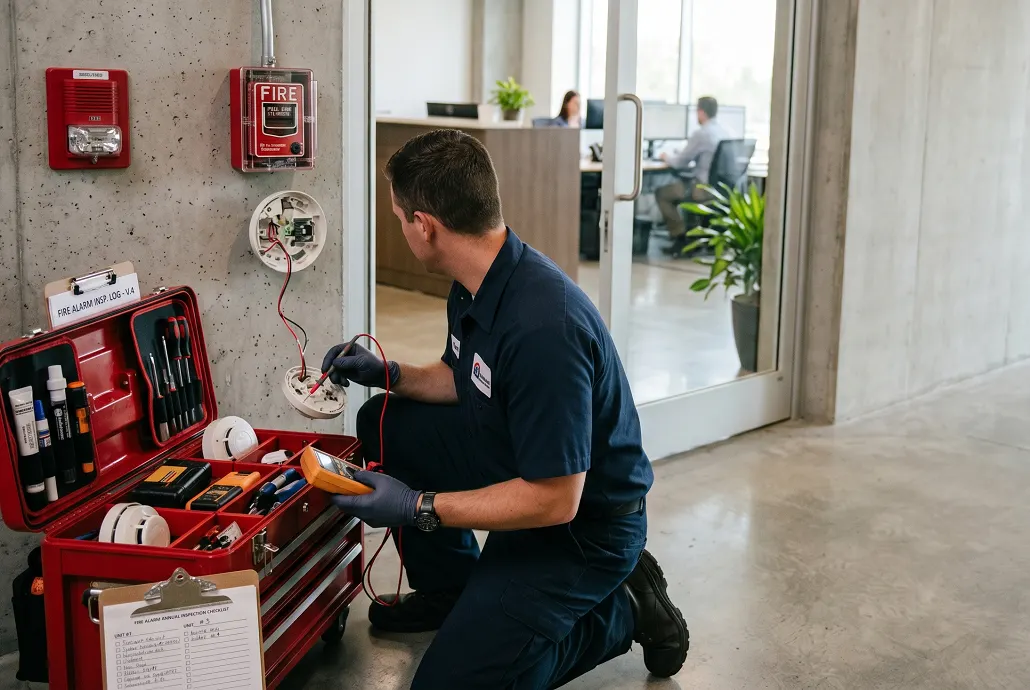
NFPA 72 requires that all inspections and testing be reported in detail on the system record log. OSHA expects systems to remain in a reliable operating condition between those formal reviews. Forbel Alarms supports testing, documentation, and retrofit planning for commercial buildings, which is where many properties fall short before inspections.
Before a scheduled inspection, facilities teams should verify these six items:
- Fire alarm panel status: No active trouble signals or supervisory conditions.
- Device obstruction check: No detectors blocked by shelving, ceiling tile, or equipment.
- Last test date: Confirm it falls within the required interval (typically annual).
- System record log: Inspection reports, deficiency notes, and corrective actions on file.
- Notification appliances: Strobes and sounders are unobstructed and functional.
- Commissioning documents: Original design drawings and acceptance test records available.
Illinois Public Act 100-0200, passed August 18, 2017, updated state smoke detector code and signaled a broader shift toward proactive compliance that continues to affect commercial property expectations across Chicagoland. Spring building audits after winter slowdowns and late-fall compliance checks ahead of insurance renewals are the two periods when Chicago-area facilities teams most often discover documentation gaps.
#cta_start
Is Your Fire Alarm Documentation Ready for Inspection?
Incomplete records are one of the top reasons commercial properties receive deficiency notices. Forbel Alarms can review your system, identify documentation gaps, and outline practical next steps before your next inspection date.
#cta_end
Costs, Pitfalls, and Integrated Upgrades
The most common compliance failures in commercial buildings follow a recognizable pattern:
- Detectors blocked by racking, ceiling tile modifications, or added partitions
- Devices past their listed service life with no replacement schedule
- Missing visible notification appliances in restrooms or corridors added after original installation
- Incomplete or missing system record logs
- No integration between the fire alarm panel and HVAC shutdown or access control release
Retrofitting pre-2017 buildings often costs more than planned, particularly after a change of occupancy triggers a full compliance review. Gaps discovered post-inspection carry emergency-service premiums on top of standard labor and material costs.
Integrated fire alarm systems tied to HVAC shutdown and door release provide value beyond code compliance. Adding mass notification systems can consolidate emergency communication into a single design. Commercial fire alarm system costs break down investment by building type.
Confirm Compliance Before Your Next Inspection
Code compliance for commercial smoke alarms is building-specific and changes with occupancy, renovations, and local amendments. Forbel Alarms provides fire alarm design, installation, integration, and documentation support for properties across Chicagoland and the Midwest. For properties ready to confirm compliance before an inspection deadline, get a free quote from Forbel Alarms.

Heading

Heading
Faq
How often do commercial fire alarm systems need testing?
NFPA 72 requires annual inspection and testing for most commercial systems, with quarterly or semi-annual testing for specific components such as batteries and monitoring connections. The AHJ may require more frequent testing based on occupancy or past deficiencies.
Do older commercial buildings need to retrofit existing systems?
A change of occupancy, system upgrade, or significant renovation typically triggers compliance review under the current code. Buildings that have not modified their systems may be grandfathered in some jurisdictions, but AHJ interpretation varies. A site review by a qualified fire protection engineer clarifies what applies. Forbel's turnkey security solutions include retrofit assessments for properties navigating these questions.
Who approves the final detector layout?
The AHJ has final approval authority. In Chicago and across the Midwest, that typically means the local fire marshal or building department plan reviewer. Layouts must match the approved design drawings on file.







Heading 1
Heading 2
Heading 3
Heading 4
Heading 5
Heading 6
Lorem ipsum dolor sit amet, consectetur adipiscing elit, sed do eiusmod tempor incididunt ut labore et dolore magna aliqua. Ut enim ad minim veniam, quis nostrud exercitation ullamco laboris nisi ut aliquip ex ea commodo consequat. Duis aute irure dolor in reprehenderit in voluptate velit esse cillum dolore eu fugiat nulla pariatur.
Block quote
Ordered list
- Item 1
- Item 2
- Item 3
Unordered list
- Item A
- Item B
- Item C
Bold text
Emphasis
Superscript
Subscript